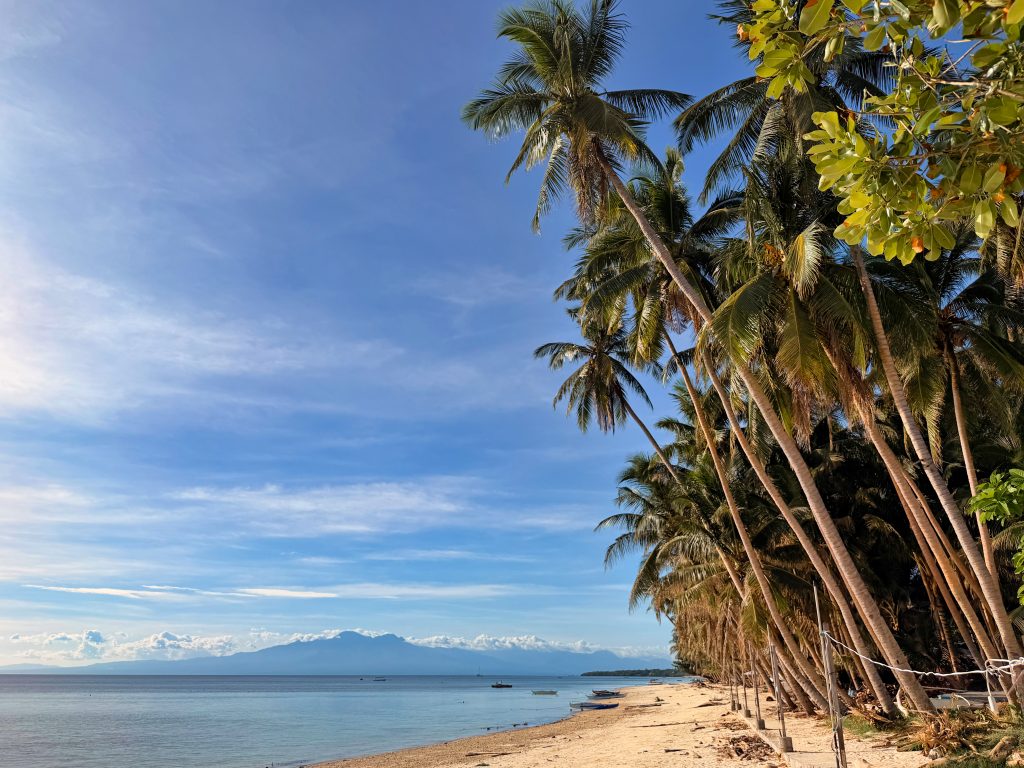
I just left Siquijor in the Philippines – and it became my new favourite place in the entire world. This is the kind of island where I would gladly take anyone – and I’m sure they would love it. In Siquijor, even locals always have a smile on their faces, because life here is pretty amazing.
I came for four days, stayed for ten, and almost cried when leaving because I knew it would be close to impossible to find a place as perfect as this island (hint: I’m yet to find an island as great as this one).
The waterfalls are unforgettable, with ropes to jump into natural pools. Snorkeling is incredible, with healthy coral reefs right off the beach. Thanks to excellent tourist infrastructure, there are countless places to eat and stay.
Visiting Siquijor comes with only two challenges: reaching the island and finding the right base to stay. In this travel guide, I’ll show you exactly how to get here easily and pick the perfect spot so you can enjoy everything the island has to offer.
Disclosure: The Always Wanderer is supported by its readers. When you buy something using my links, I may earn a small commission at no additional cost to you.
No Time to Read?
Siquijor at a Glance
Where to Stay
- Stay in San Juan town — best beaches, all great restaurants & hotels, waterfalls, and snorkeling spots.
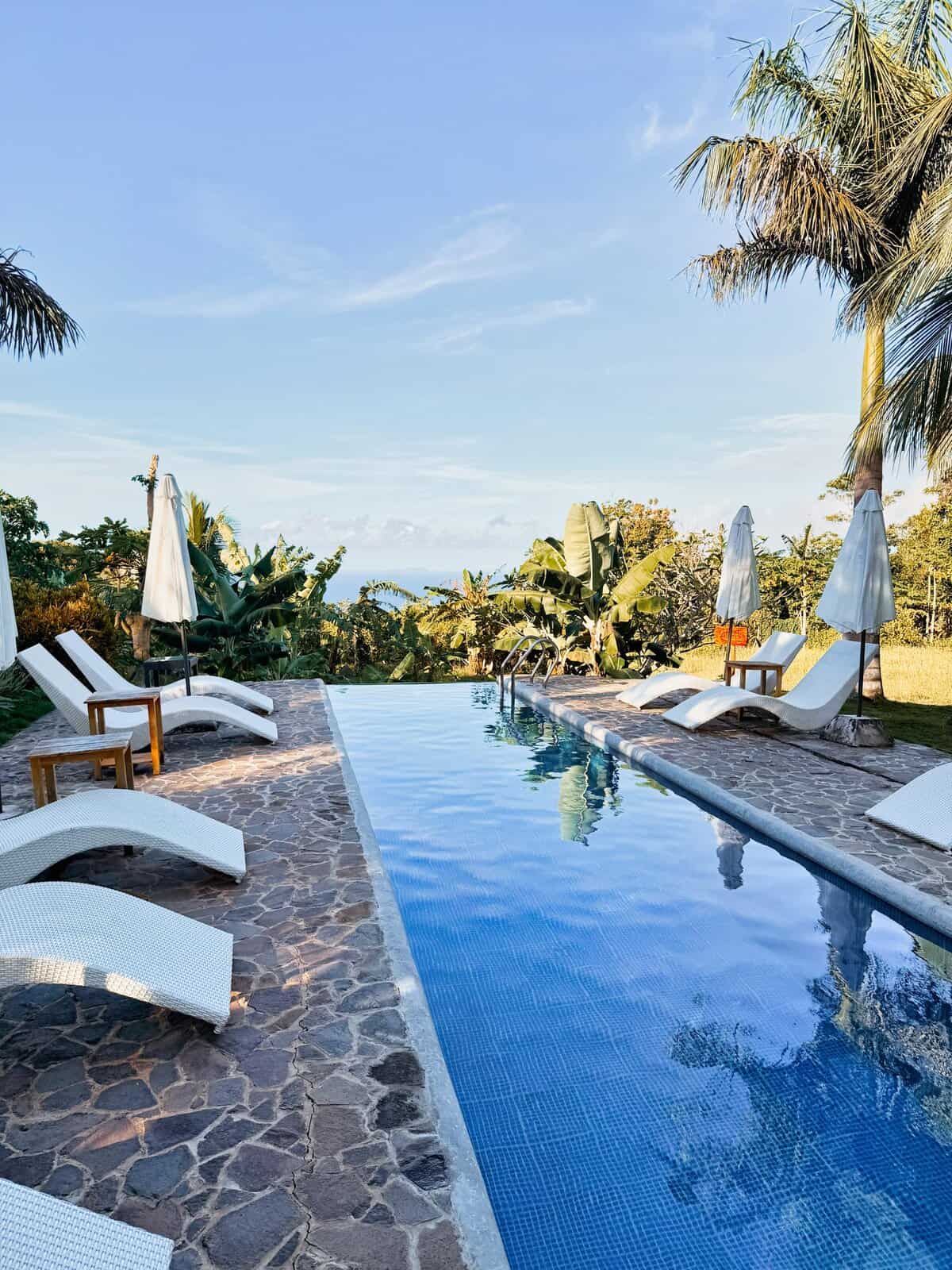
- We stayed at South Mountain Resort — quiet, on a mountain with clean air and cooler weather. (It has Starlink, so no power cuts)
- Coco Grove Resort — ideal for snorkeling lovers, right at Tubod Marine Sanctuary, the island’s best coral garden.
- Tip: Many places are on the main road; if you`re a light-sleeper, check the location before booking.
Must-See Spots
- If you have limited time, choose this Siquijor day trip to see the best the island has to offer
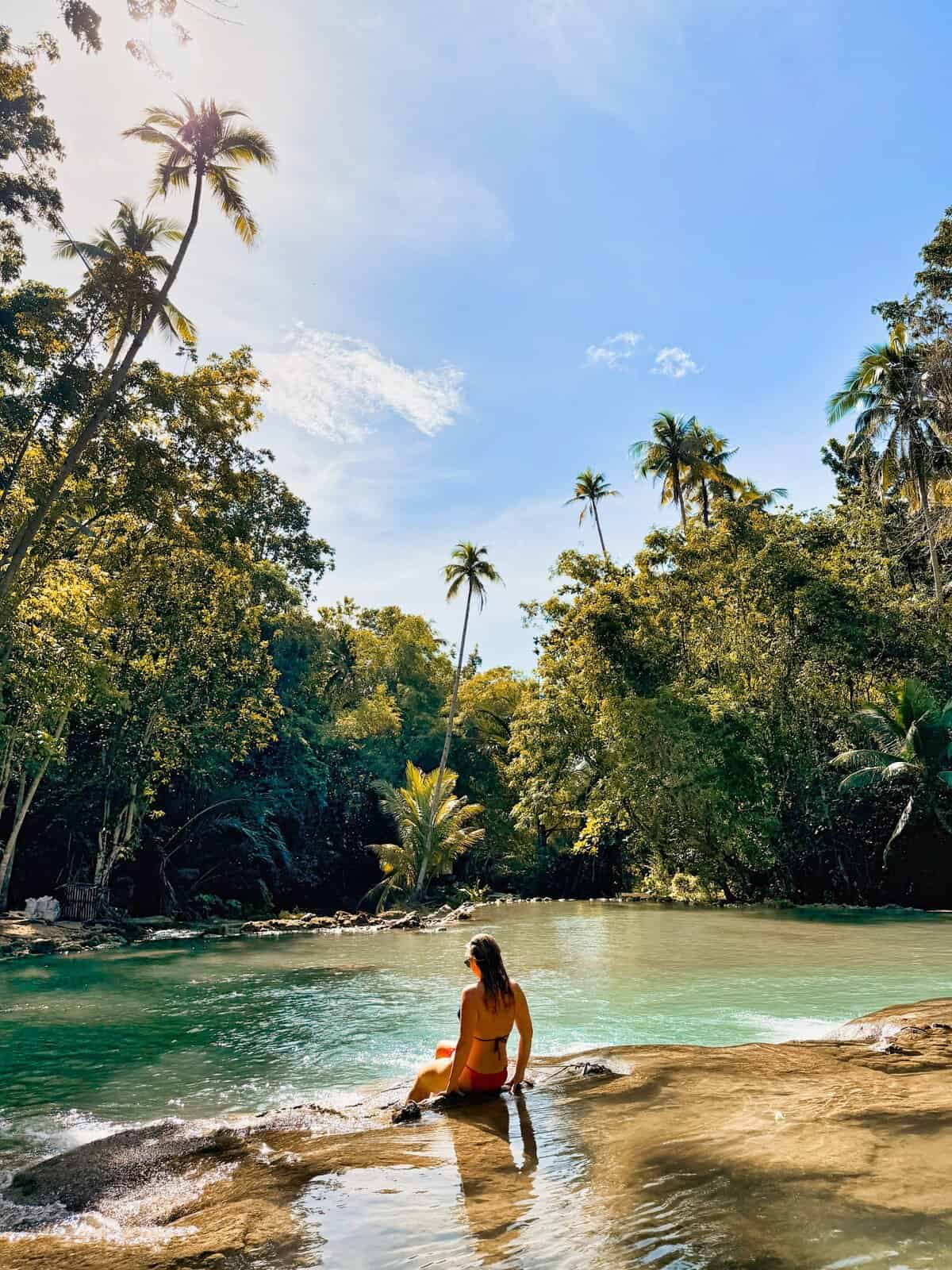
- Cambugahay Falls — a waterfall with rope swings, natural pools, and adventure for thrill-seekers.
- Tubod Marine Sanctuary (Snorkeling) — vibrant coral reefs right off the beach in San Juan.
- Cangbusyo Beach — breathtaking sunsets, small bars, and relaxed vibes.
Getting to Siquijor
You might have read that getting to Siquijor is difficult, but once your travel day starts, it’s actually very straightforward. The key is to start early, in case there are any ferry schedule changes or you miss a connecting ferry.
Most travellers visit Siquijor after staying in Cebu or on Bohol Island. Below, you’ll find the route that applies to you, with each step explained in detail. We visited Siquijor from Oslob, which requires a bit more planning, but as you’ll see in the map below, it’s a well-known and easy route.
If you’re coming from Bohol or Cebu City, there are direct ferries, making the trip even easier.
For ferry schedules, 12goasia is usually up to date. Our journey was smooth, with calm seas, and the route is generally sheltered by surrounding islands.
Pro tip: If you’re visiting Bohol, consider adding Camiguin to your itinerary—it’s a real hidden gem in the Philippines.
This is exactly how we got from Oslob to Siquijor:
- Step 1: From Moalboal/Oslob, take the public bus to Liloan Port (runs hourly).
- Step 2: Ferry to Sibulan Port (~45 minutes).
- Step 3: Tricycle from Sibulan to Dumaguete Port (300 pesos).
- Step 4: Ferry from Dumaguete Port to Siquijor (~1 hour).

1st ferry: Liloan Port to Sibulan Port 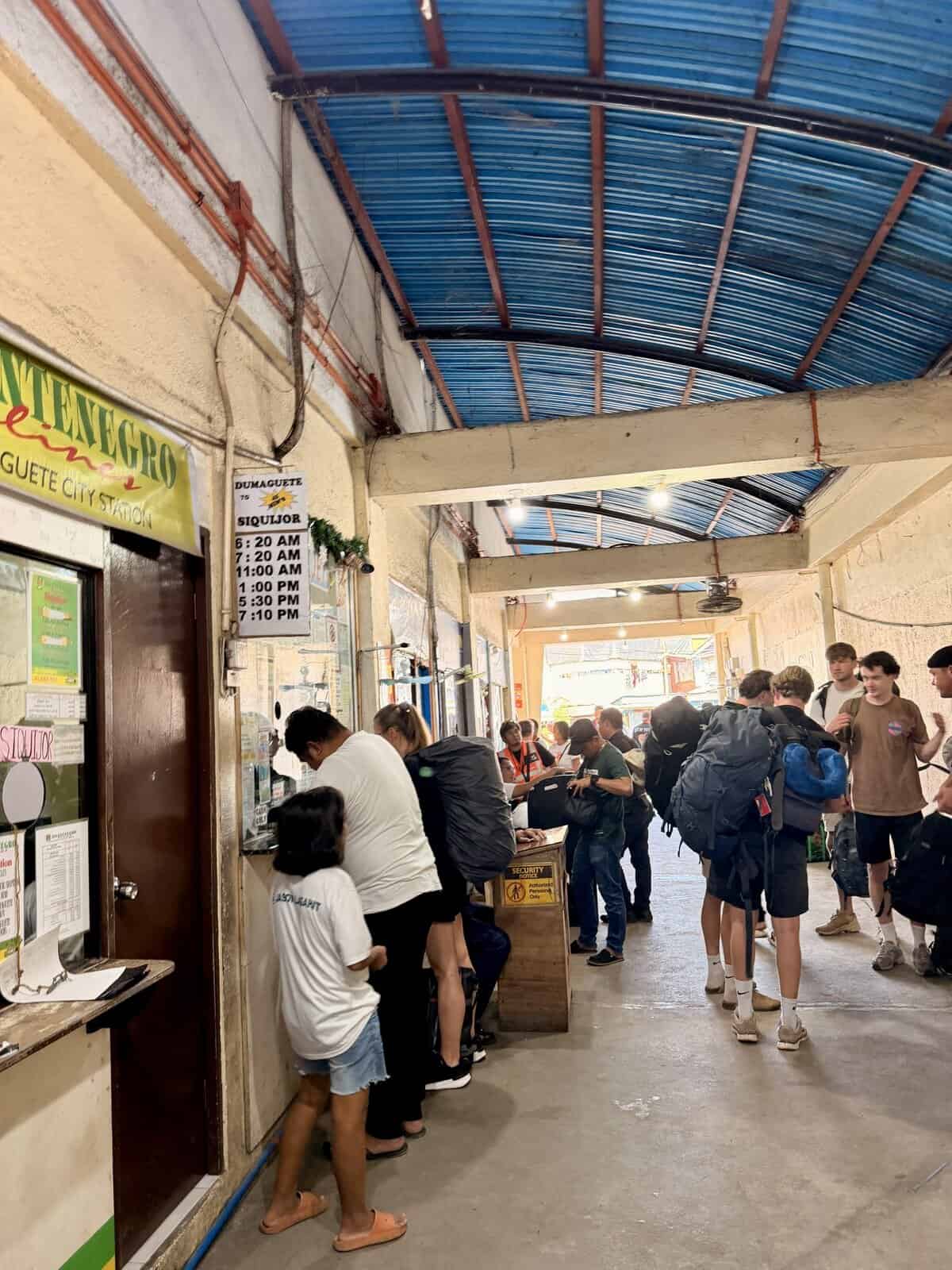
2nd ferry: Dumaguete Port to Siquijor Port
- Schedule: 6am–7pm, with departures roughly every hour or two from midday to evening.
- Closest jump-off point to Siquijor.
- Boat ride: ~1 hour.
- Ferry companies: Two options, tickets around 310 pesos (one slightly more expensive).
- Direct ferries several times a day.
- Route: Same boat continues to Tagbilaran in Bohol, usually stopping along the way.
- Duration: ~4–5 hours.
- Direct ferry from Tagbilaran to Siquijor.
- Tagbilaran is close to Panglao, where most tourists stay.
- Duration: ~2 hours.
Getting Around in Siquijor
Getting around in Siquijor is best done by scooter. The easiest option is to rent one directly at the port, from where you can reach San Juan in about 20 minutes.
As soon as you arrive at Siquijor Port, locals will approach you offering scooter rentals. There are many rental shops, and they all offer very similar bikes at similar prices. We rented ours from PLS Motorbike Rental, but in general, all rental shops are quite good.
My tip: negotiate a little, and you can easily rent a scooter from the better category for 300 pesos. Don’t pay more than that.
If you don’t want to rent a scooter, you can always find a tuk-tuk to take you around the island.
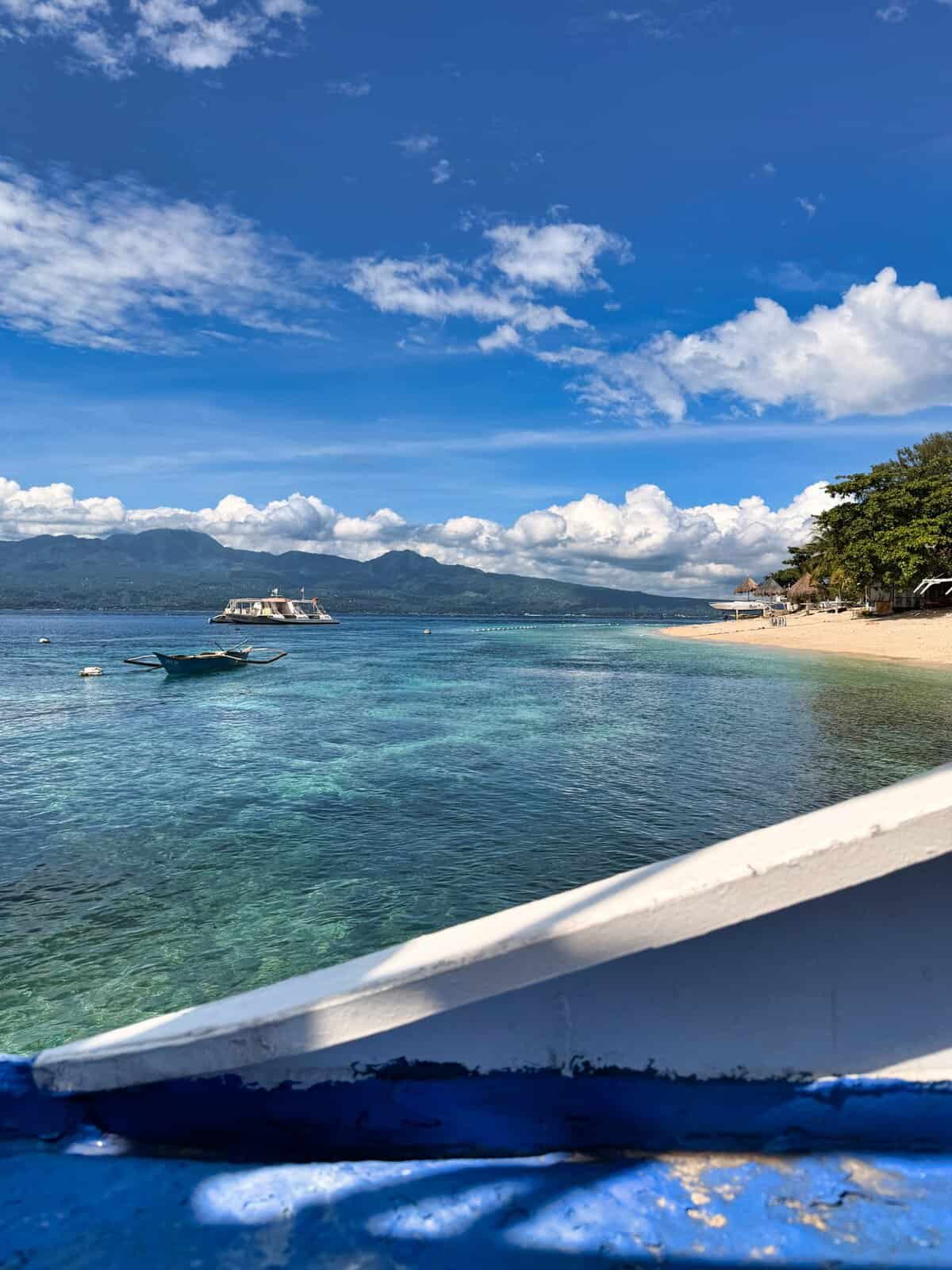
Liloan Port (Cebu) towards Sibulan Port 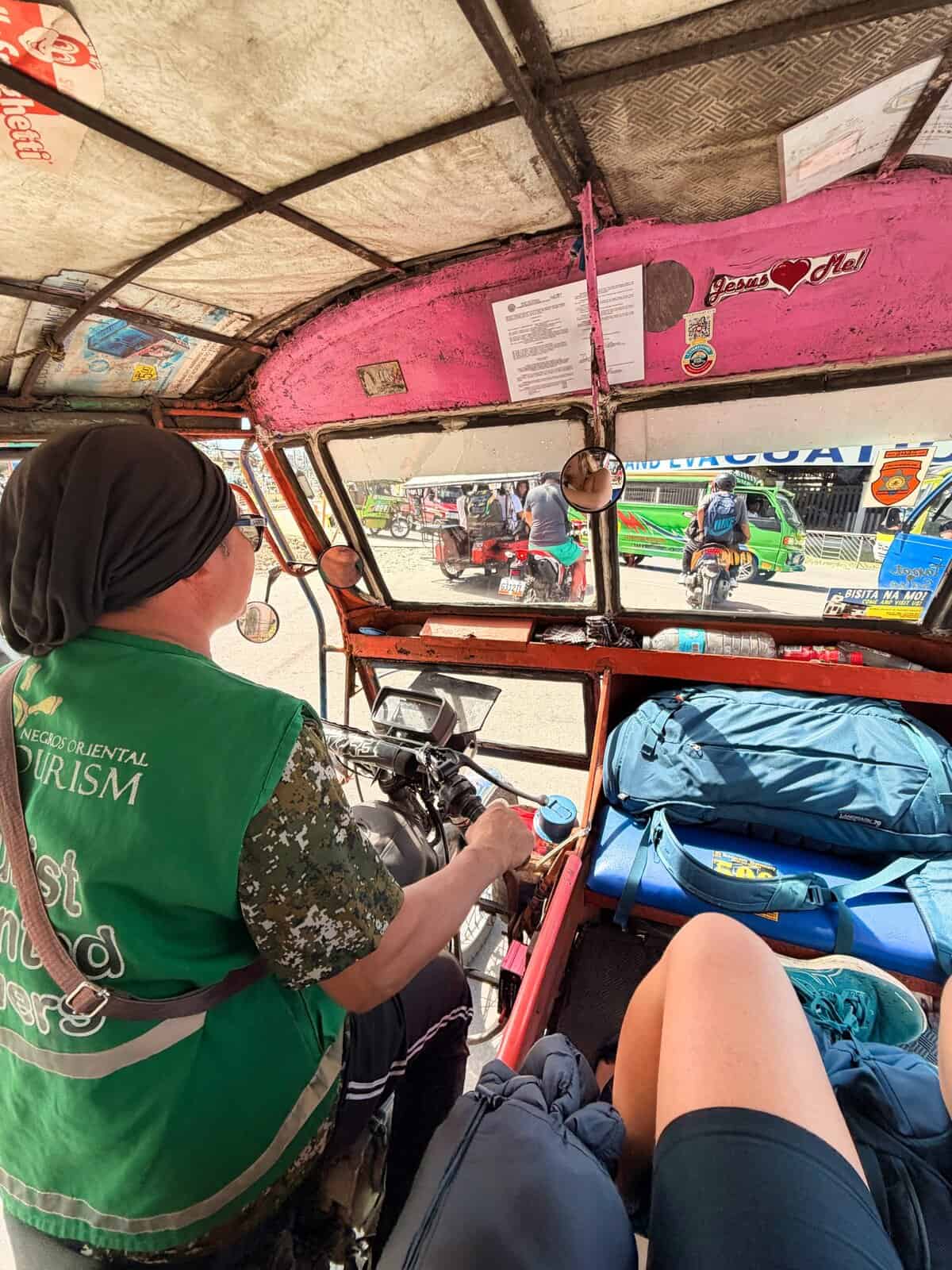
From Sibulan Port, on the way to Dumaguete Port
Where to Stay in Siquijor
Don’t look further – base yourself in San Juan. This is where the best waterfalls are nearby, the best beaches are located, all the good restaurants, bars, and coffee places are, plus great snorkel spots. It’s also where you can watch the sunset.
With all those bars and restaurants, San Juan centre can be loud at night. If you’re a light sleeper, make sure you don’t stay directly on the main road.
Our first accommodation was right on the main street, and we had trouble sleeping. We then moved to South Mountain Resort, which is about 5 minutes from the main road in San Juan, up on the hill. It’s perfectly calm and quiet.
Let`s dive into the best places you can stay at in San Juan.
San Juan: Best Areas to Stay
San Juan has one main road, and the busiest area is around the famous Baha Bar. If you’re looking for bars and nightlife, Bermuda Triangle Bungalows is a great spot to base yourself.
If snorkeling is your priority, Coco Grove Resort is my top pick. Next time I visit, I will definitely stay here — it’s right next to the Tubod Marine Sanctuary, the best snorkeling spot in Siquijor with a healthy coral reef.
We first stayed at Hanna’s Place, but after four nights, we moved to a quieter area. It was just too noisy as it was located next to the main road. (Otherwise, Hanna`s Place is a great and budget-friendly option to stay at.)
For a more relaxing stay, try a hotel slightly off the main road, either on a quieter beachfront or up in the mountains. The air is fresher, the vibes are calmer, and it’s a little cooler (don’t worry, you won’t be cold).
Our perfect base ended up being the South Mountain Resort. To stay here, it’s better to book in advance — we wanted to stay longer, but it was fully booked (and it usually is).
The resort is run by a kind guy from Sweden, the food is incredible with huge portions, and I loved that I could see so many different and unique birds in the garden every day. Even though this accommodation is more expensive than a standard room on the main road, the calmness, the friendly staff, and the gorgeous pool make it 100% worth it.
4 Best Things to Do on Siquijor Island
I was forever a fan of the Thai islands. However, after visiting the Philippines and seeing what nature offers — waterfalls and coral reefs — the Philippines is unbeatable in terms of that. So if you love corals, snorkeling, and waterfalls, the Philippines will easily become your favourite. I got to know that coral reefs are so great because the Philippines belongs to the Coral Triangle.
So let’s dive into the best things you shouldn’t miss when you visit Siquijor.
1. Go Snorkeling
I’m completely addicted to snorkeling, and Siquijor did not disappoint. One of my favorite spots was Tubod Marine Sanctuary in San Juan. I went there every single day! The moment you enter the shallow water, you’re surrounded by colorful fish and healthy coral. Because the water is shallow, make sure not to touch the corals—they’re living animals.
At Tubod Marine Sanctuary, snorkel rentals cost 100 PHP, and the entrance fee is also 100 PHP. The ticket is valid for the whole day, so you can go in and out as many times as you like. If you prefer, you can also hire a guide for extra comfort and safety.
Another incredible snorkeling spot is Tulapos Marine Sanctuary. Here, we saw a blacktip reef shark and giant clams—it was unforgettable! A guide is mandatory, which makes sense: last year, someone accidentally stepped on a giant clam and lost a leg (which I somehow doubt, but that`s what the local guide told us).
At Tulapos, you swim about ten minutes to reach the coral reef. The water is deeper, and there can be currents, so having a guide is really reassuring. Plus, he showed us a shark, a pufferfish, turtles, and many other marine species. Keep in mind that the reserve may close if visibility is poor, so it’s a good idea to text ahead and check if they’re operating that day. (Whatsapp: +63 955 326 0299, the guy is called Rexon)
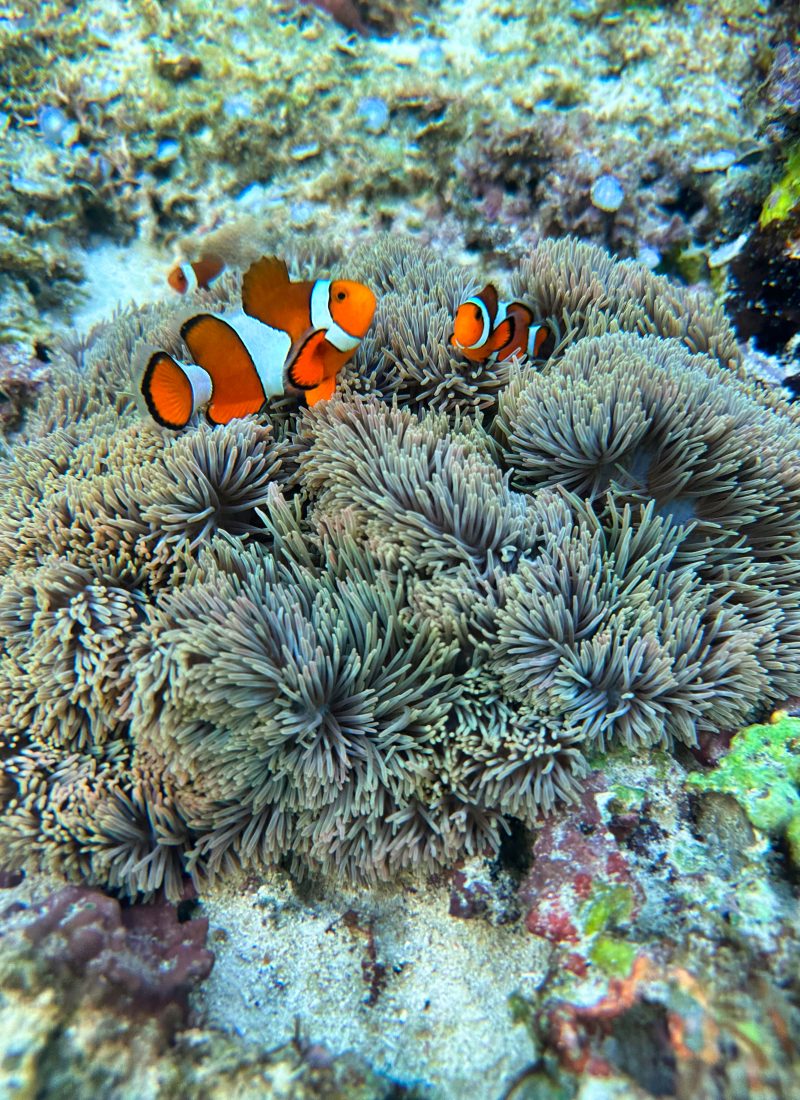
Tubod Marine Sanctuary 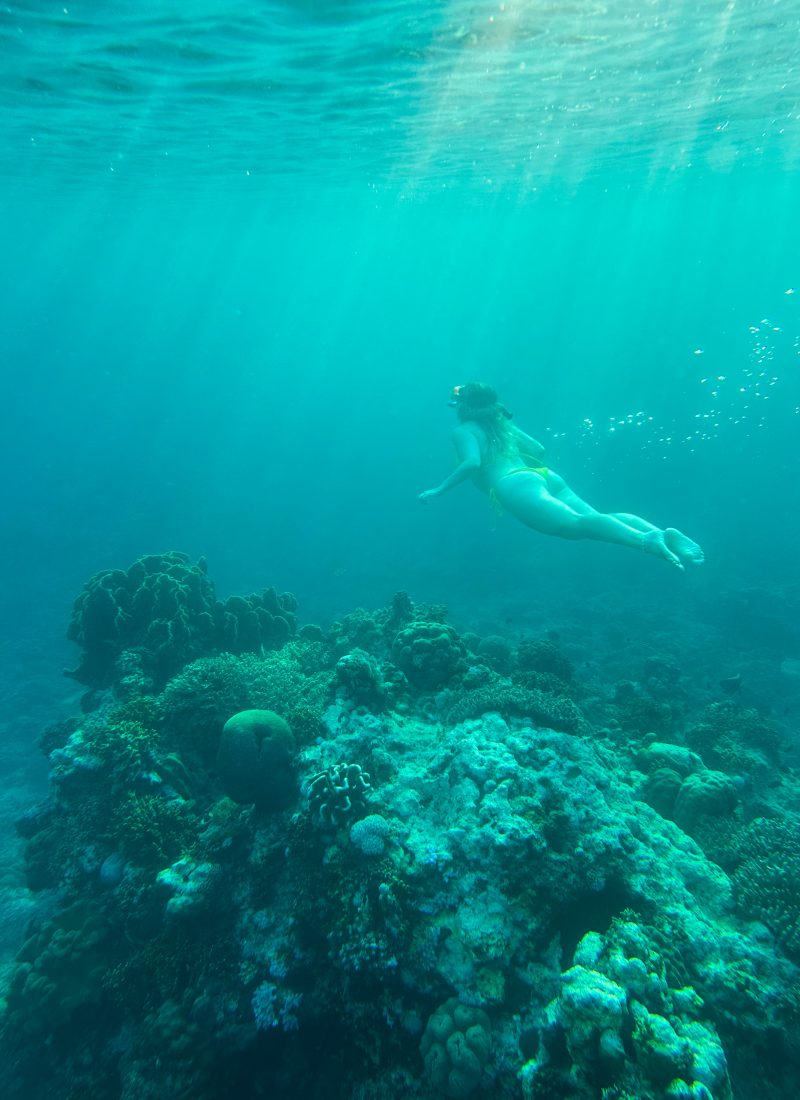
Coral Gardens of Siquijor
2. Chase Waterfalls
The most popular waterfall is Cambugahay Falls, and it’s popular for a reason. It’s a multi-tiered waterfall located about half an hour’s drive from San Juan.
There are rope swings of different levels, kids can also swim in the natural pools, and there are several tiers to explore. It feels like a giant natural playground. For me, it was a dream come true, jumping off ropes into the crystal-clear, bluest waters.
Pro Tip: Arrive right when it opens at 8 am — we did exactly that and could enjoy the falls in the calm morning hours. By 10 am, it was already quite busy.
Another great waterfall is Lugnason Falls, located right next to San Juan — probably very close to most accommodations. It’s smaller, with one jumping spot (I found it a bit too adventurous, so I skipped the jump). If you’re up for adventure or sporty activities, ask at the entrance for a guided hike.
It takes around 2–3 hours and includes hiking along multiple waterfalls. We didn’t do it ourselves, but our friends who did said it was incredible — they looked so happy as they shared their experience!
Pro Tip: From Lugnason Falls, a short jungle path leads to freshwater pools. The water is very clean, surrounded by coconut trees, and it’s usually empty — a perfect place to hang out.
For serenity and something truly offbeat, check out Cangbangag Falls. It requires a 20-minute hike, but it’s absolutely worth it. The drive there is beautiful, with rice terraces and stunning nature. Keep your eyes peeled — we saw many creatures along the way!
Pro Tip: The Cangbangag Falls is relatively close to the Tulapos Marine Sanctuary and Salagdoong Beach, so it’s best to combine those activities in a day trip.
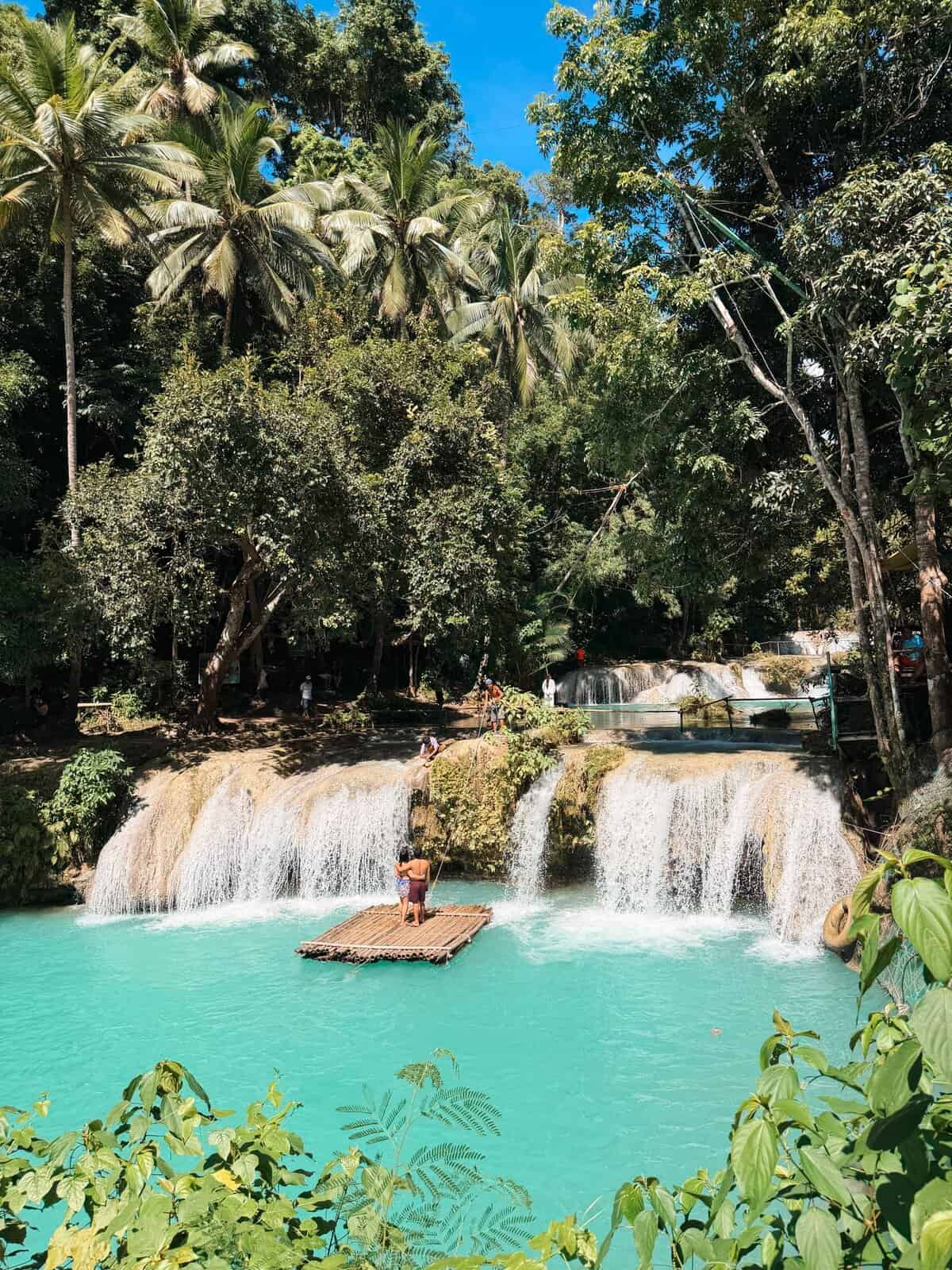
The best in Siquijor: Cambugahay Falls 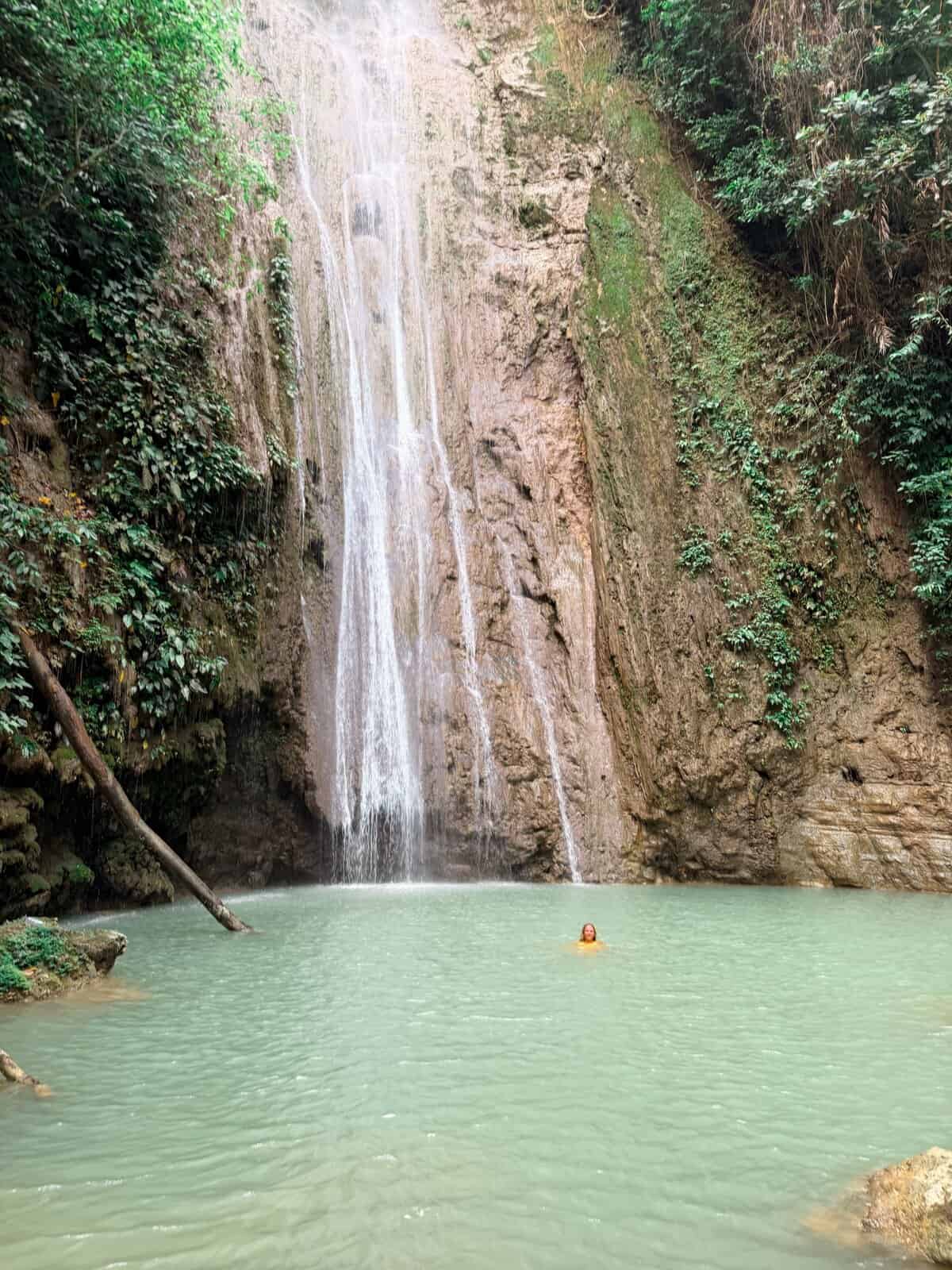
To avoid the crowds: Cangbangag Falls
3. Watch the Sunset in San Juan
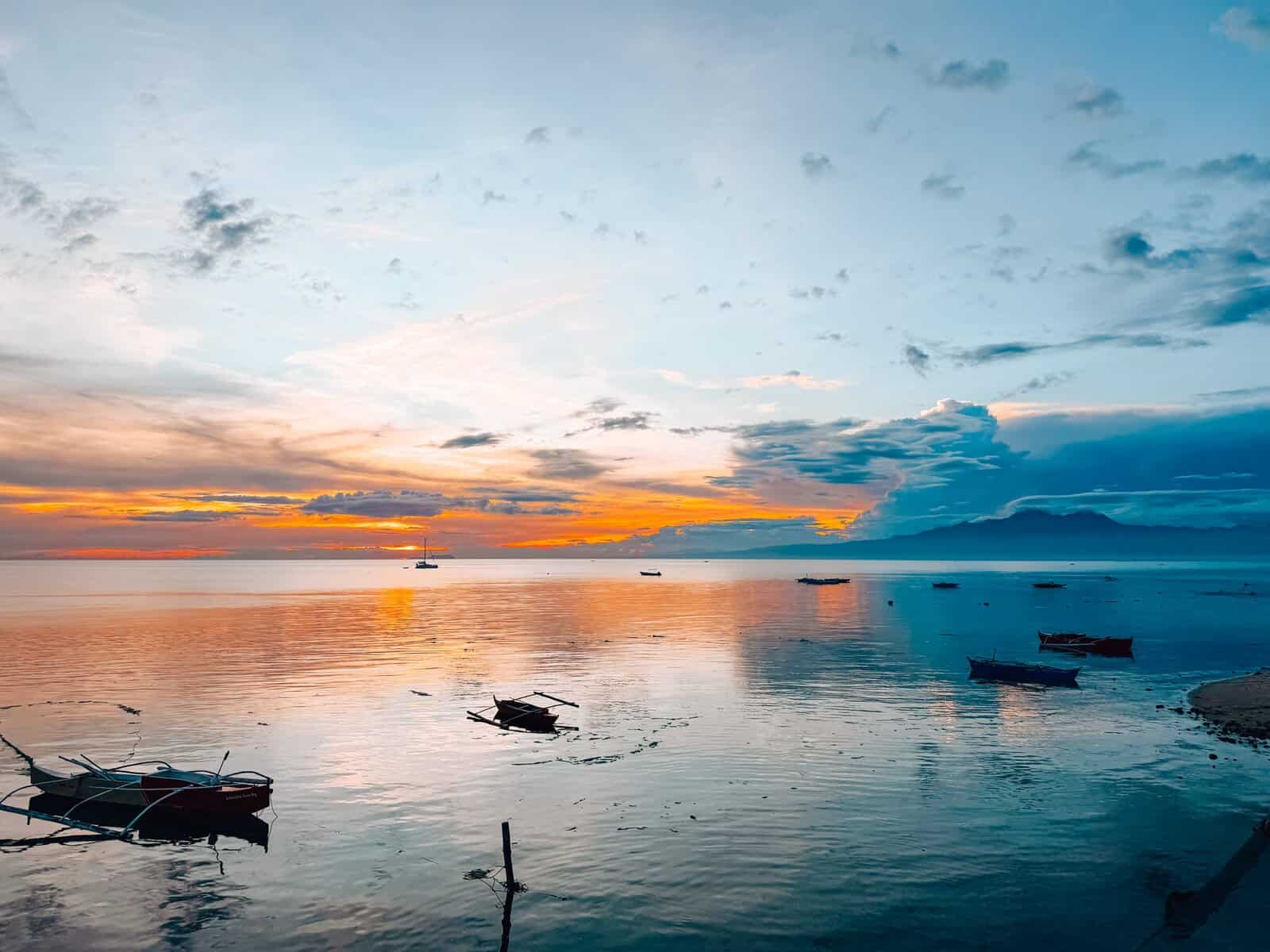
I watched the sunset every single day during my ten-day stay in Siquijor, and my favourite spot was Cangbusyo Beach, also known by locals as Little Paliton Beach.
It has a great, laid-back vibe with white sand and warm, shallow water. There are a few small bars where you can get food, coconuts, cocktails, cold beer, or a mango shake. We loved sitting in the ocean, beer in hand, and watching the sunset.
Paliton Beach is the popular option right next to Cangbusyo Beach. It’s much busier and more commercialised, with shops and more people around, but it’s lined with palm trees and can be better for photos.
Right after sunset, the bars at both Cangbusyo and Paliton Beach close, but before that, the atmosphere is very freeing and relaxed. To enter either beach, there’s an environmental fee of 20 pesos per person, plus a small optional donation for parking.
You can also watch the sunset from many other spots around San Juan — from the Pitogo Cliff, Shaka Bar, the Tubod Marine Sanctuary, or next to Get Wrecked Beach Bar.

4. Visit Salagdoong Beach
Salagdoong Beach has become one of the most famous beaches in Siquijor because of its Caribbean-blue water — without a doubt, the most beautiful water color on the island. It’s located close to Maria, about 50 minutes from San Juan, and there are corals, so you can bring your snorkel set with you.
There are small shops selling coconuts, cocktails, coffee, and meals, plus shaded seating with umbrellas, so you can easily spend a few hours here.
In the middle of the beach, there’s a rocky area where you can do cliff jumps into the water. Always check the tide and only jump if locals or others are doing it, or ask if it’s safe.
We also found beautiful shells along the shoreline. Personally, I’m not someone who loves just lying on the beach, so we didn’t stay too long, but I can definitely see why people love Salagdoong — it really is a stunning beach.
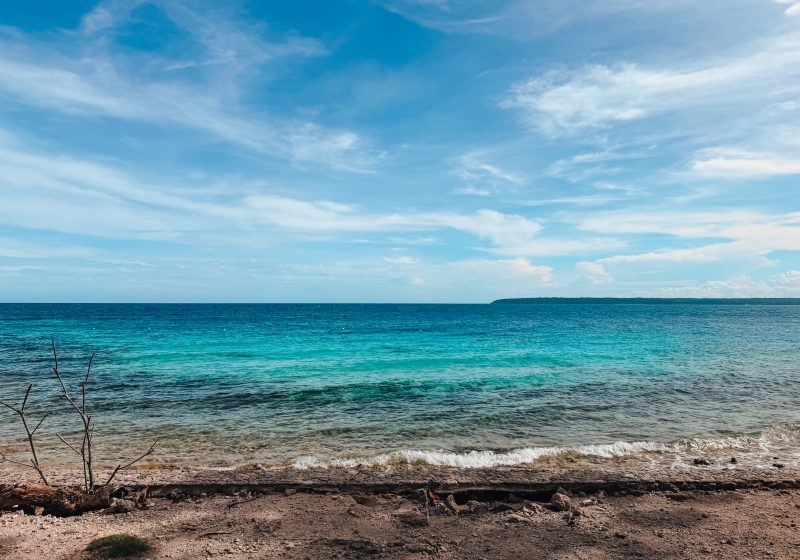
5. Go Cliff jumping at Pitogo Cliff
Pitogo Cliff is a stunning spot with deep blue waters, perfect for swimming or jumping straight into the ocean. It’s not a full-day activity, but you can plan to spend an hour here. It’s only about 15 minutes from San Juan, making it an easy stop — and also a great sunset spot.
If you don’t feel like jumping, there’s also a bamboo ladder leading down into the sea. I took my snorkel with me and saw some nice fish too.
Note: There is a small fee to enter the area.
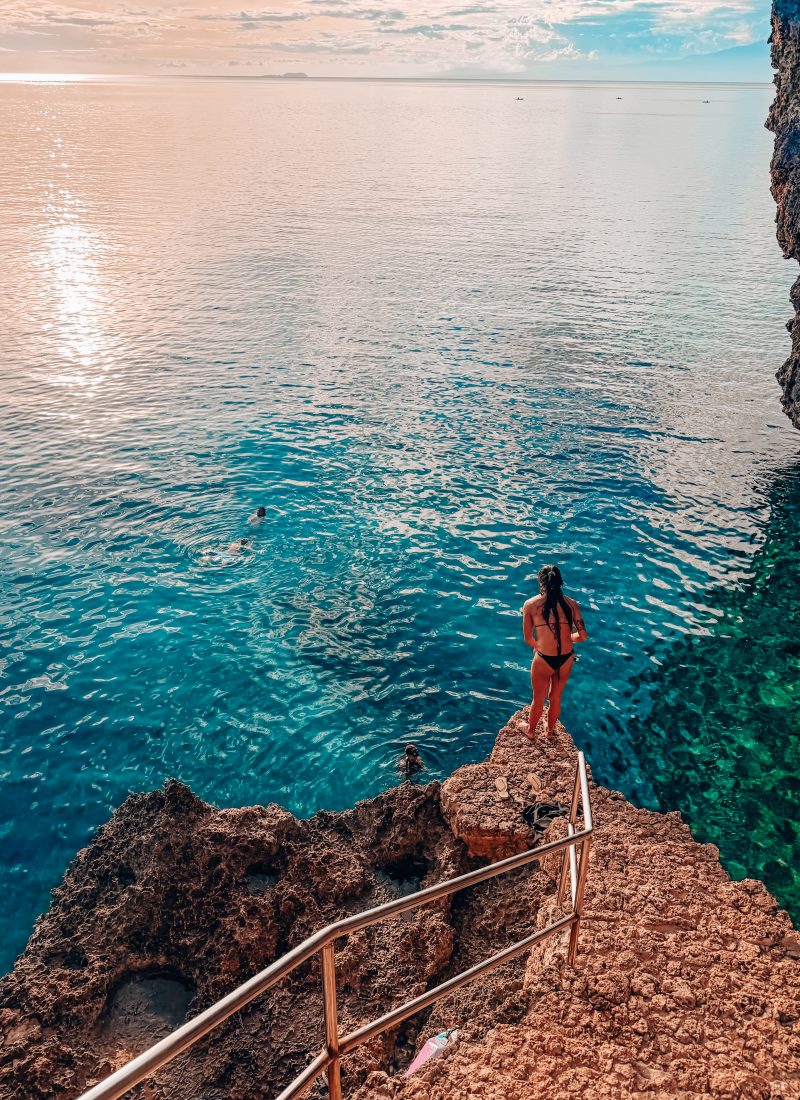
Cliff jumping platform 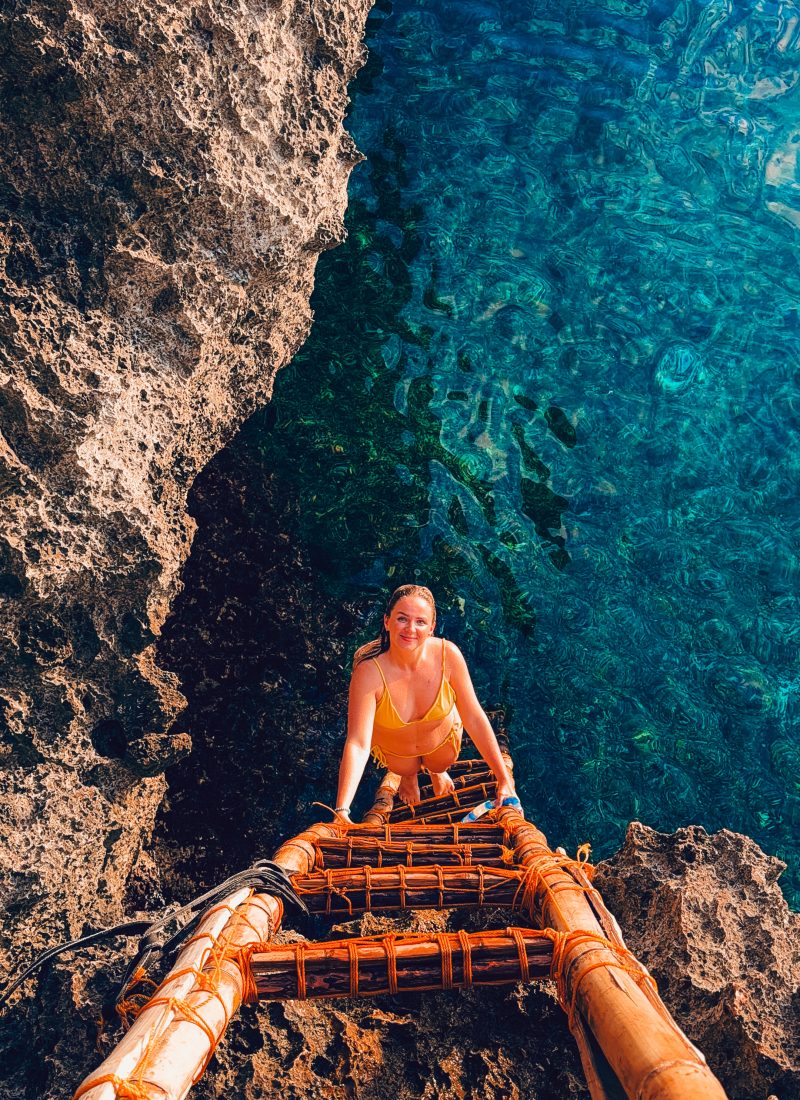
A bamboo ladder leading to the ocean
6. Visit the Baroque Church in Lazi
Lazi Church is one of the most beautiful and atmospheric spots on Siquijor. Surrounded by huge old trees, the Baroque-style church has a soft blue interior and a very peaceful feel.
Just across the road, the church garden looks surprisingly European — it was built by the Spanish, and it honestly feels more like southern Spain than the Philippines. It’s a great quick stop for photos and a quiet walk while exploring this side of the island.
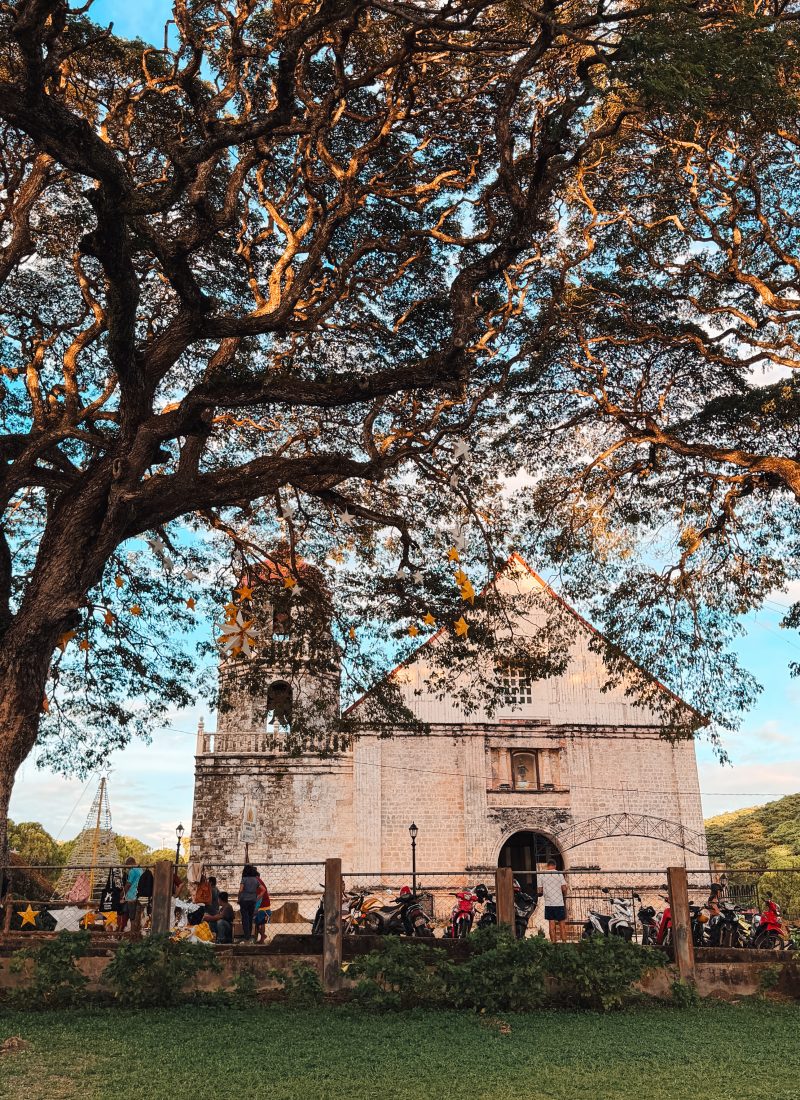
Baroque Church in Lazi 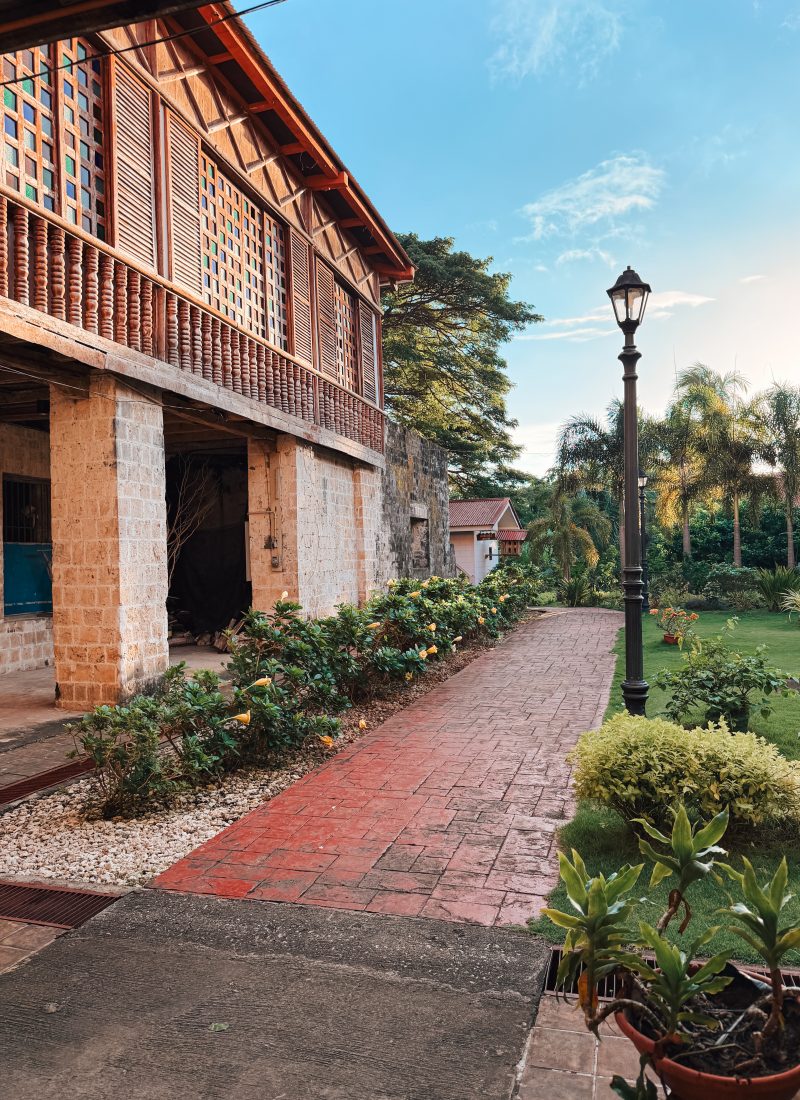
Church Garden in Lazi
Best Restaurants in Siquijor
Most good restaurants are located in San Juan. Outside of San Juan, there are only very few places to eat — another reason to stay in San Juan.
If you want a very local experience, try Rea’s Kitchenette. It’s the place where the locals go to have lunch. It reminded me a lot of my Hungarian grandma’s cooking. The owners are some of the funniest and kindest people, so we ended up going there several times. Another quite local place is the Roadside Diners, where you can try the traditional Filipino dessert, the mango float. It’s the best.
For a fancier/more western place, we loved Gayuma Beach Bar for the seafood, Belle’s Beach Bar for great vegan food, and Aroi Mak Mak for the sunset and great Thai food.
For nightlife, most of it happens in CocoRico and Baha Bar, and along Siquijor Circumferential Road, aka the main road in San Joan.
For breakfast and coffee, we loved Fig Cafe. They open at 7 am, which is surprisingly early for Siquijor. Many coffee and breakfast places only open around 9–10 am, and this was the only one we found open that early. So, we went there most mornings.
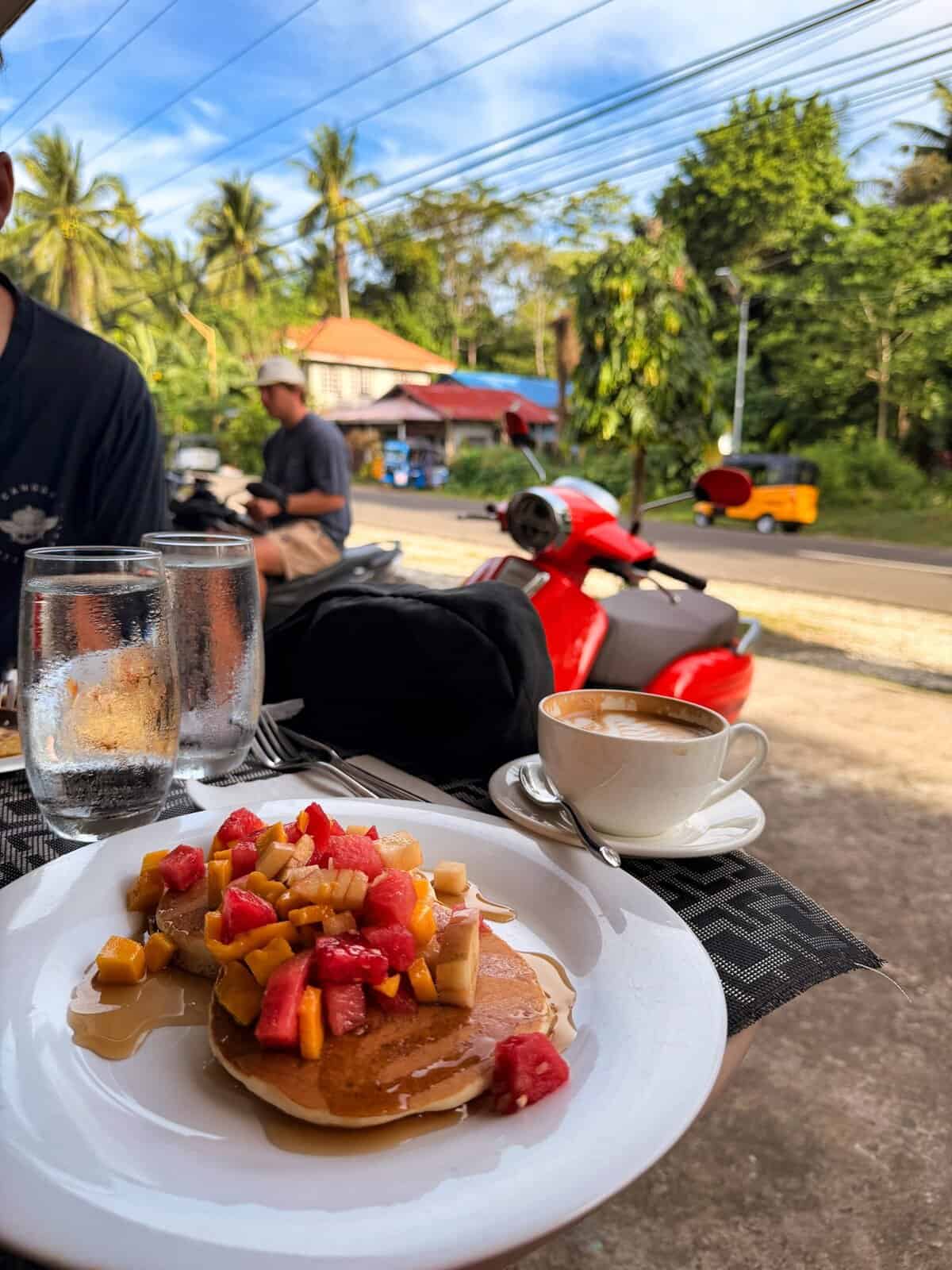
The only cafe that is open at 7 am 
Warung Balay in San Juan
Safety in Siquijor
Safety was my biggest concern before coming to the Philippines. I had heard stories of people feeling unsafe, and I was also a bit worried about natural disasters. But as soon as I landed in the country, I felt completely safe.
Siquijor feels calm, organized, and well cared for. It even seemed more developed than Palawan or Coron (if you’re ever there and up for an adventure, my friend once climbed onto an abandoned plane wreck in Coron?!). The locals make it even easier to feel safe. They are friendly, welcoming, and almost everyone speaks good English, which makes it simple to ask questions or strike up a conversation.
Natural disasters are rare. Earthquakes don’t happen often, and there are mountains you can reach quickly in the unlikely event of a tsunami. Plus, Siquijor is sheltered by much larger islands nearby, which adds an extra layer of security.
We also used the Zoom Earth app to track typhoons in advance, which was reassuring to see that nothing was headed our way during our visit.
Overall, I felt completely comfortable traveling around in Siquijor and the Philippines. Solo travelers I met said the same, and the growing number of expats living on the island is another good sign that Siquijor is safe and welcoming.
Conclusion: Is Siquijor Worth Visiting?
I spent one month in the Philippines, and while Siquijor isn’t the most offbeat place — and it’s becoming more popular for a reason — it’s still not crowded and absolutely worth visiting. I honestly couldn’t find anything to criticize about the island, and I can easily imagine myself spending several months there.
Even for families or kids, Siquijor is like a giant playground. It’s very kid-friendly, and the growing expat community shows why so many people choose to move here.
So, if you’re wondering whether to visit Siquijor: go for it! You won’t regret it, especially if you love snorkeling, waterfalls, or just relaxing in a beautiful, peaceful setting.
I hope this guide helps you plan your trip. Feel free to leave a comment or reach out — I love hearing from readers and helping with travel questions!



Leave a Reply